

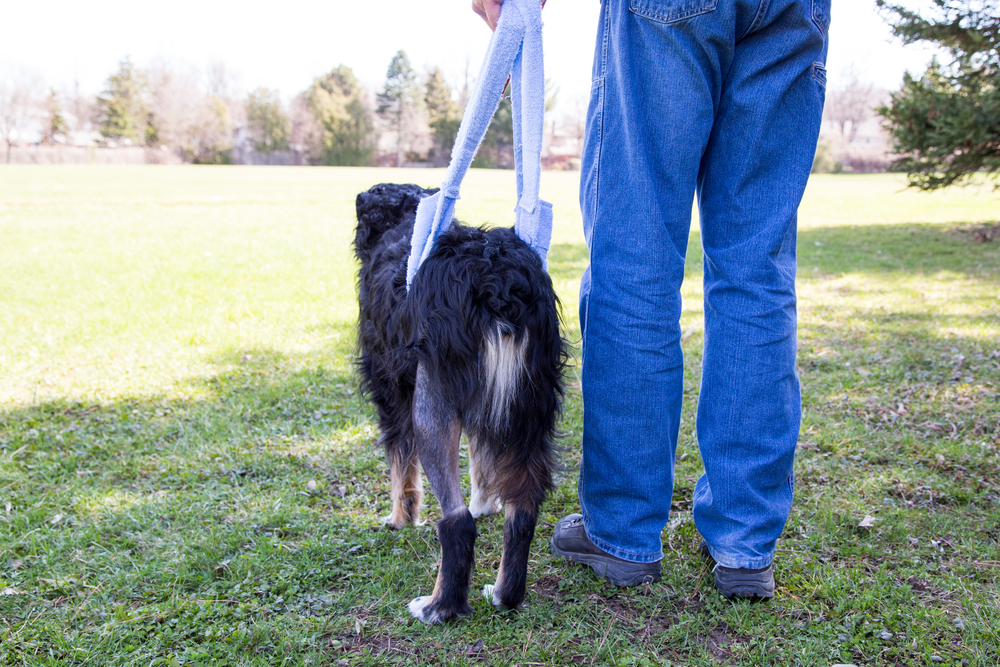
A CCL tear is one of those diagnoses that tends to catch owners completely off guard. One moment your dog was fine; the next, they’re holding a back leg up or moving with a stiffness you’ve never seen before. And then comes the rush of questions: what exactly is a CCL, how did this happen, does it need surgery, and what does the road ahead actually look like?
The cranial cruciate ligament, or CCL, is one of the primary stabilizing structures inside the knee joint. When it tears, partially or completely, the joint loses the mechanical support it depends on for normal movement. Pain and instability follow immediately, and without treatment, progressive arthritis and secondary damage to the joint’s cartilage and cushioning structures develop over time. CCL tears are among the most common orthopedic injuries in dogs, they affect certain breeds and body types more than others, and they are highly treatable when caught and addressed early.
At North Waterloo Veterinary Hospital in Elmira, Ontario, we’re a practice known for our family-style approach and consistent, individualized care. We provide thorough assessment, diagnostics, and pre- and post-operative support for dogs with CCL injuries, and we coordinate care with trusted surgical partners so your dog has access to specialist-level orthopedic surgery without losing continuity with the team you know. Reach out to us to have a limping dog assessed and start getting answers.
When Your Dog Suddenly Can’t Put Weight on a Hind Leg
Dogs are active creatures, and most owners accept that a morning of rough play might produce some stiffness by afternoon. But when a dog comes in from the yard holding a back leg up entirely, or when the limp that seemed minor at the weekend is still there on Wednesday, that deserves more than watchful waiting.
Cranial cruciate ligament (CCL) injuries are among the most common orthopedic problems in dogs. The CCL is a ligament inside the knee joint that holds the tibia (shin bone) in place relative to the femur (thigh bone) and prevents the joint from sliding forward during movement. When it tears partially or completely, the result is instability, pain, and progressive joint damage. The longer it remains untreated, the more arthritis develops in that joint, which is why early evaluation matters.
Why Do Dogs Tear Their CCL?
Causes and Risk Factors
Unlike the traumatic ACL tears that happen to human athletes in a single violent moment, canine CCL injuries often develop over time. A ligament that has been gradually weakening from chronic stress, inflammation, or age-related changes may finally give way during something as ordinary as jumping off the couch or turning sharply during a run. Sudden, traumatic complete tears do occur, but partial tears that worsen progressively are also common.
Canine cruciate ligament injury tends to occur more often in certain dogs. Factors that increase risk include:
- Sudden pivoting or twisting on slippery surfaces, hard floors, or uneven ground
- Breeds with anatomical predisposition, including Labrador Retrievers, Rottweilers, Bulldogs, and Boxers
- Excess body weight placing chronic additional load on the joint
- Hip dysplasia or patellar luxation, that changes how a dog normally moves and strains the ligament
- The “weekend warrior” pattern: a dog who is mostly sedentary during the week but highly active on weekends, whose joints and ligaments aren’t conditioned for intermittent high-demand activity
- Prior partial tear or knee strain that has been managed conservatively
Maintaining healthy body weight and consistent, moderate exercise rather than infrequent intense bursts are two of the most effective strategies for reducing CCL injury risk. Our team can help develop a diet and activity plan suited to your dog’s age, size, and current condition.
What Does a CCL Tear Look Like?
Recognizing the Signs at Home
The presentation of a CCL tear varies depending on whether the injury is partial or complete. A complete tear tends to produce sudden, non-weight-bearing lameness. A partial tear is often more subtle and easy to initially dismiss as a sprain.
Signs that warrant a prompt evaluation:
- Hind-limb limping that started suddenly or that worsens after activity and improves with rest
- Difficulty rising from a lying position, or needing to shift weight before standing
- Reluctance to jump, use stairs, or load the affected leg
- Visible swelling on the inside of the knee joint
- A toe-touching gait where the paw makes contact but the leg doesn’t fully bear weight
- Progressive muscle loss in the affected thigh over weeks
If your dog is showing these signs, we offer same-day appointments and in-house imaging to get answers quickly.
How Is a CCL Tear Diagnosed?
Imaging and Orthopedic Assessments
We use a combination of physical examination and imaging to confirm a CCL tear. The two main palpation tests are the drawer test, which assesses whether the tibia slides forward relative to the femur when the joint is manually stressed, and the tibial thrust test, which checks for the same movement during simulated weight bearing. A positive result on either test is a strong indicator of CCL rupture.
X-ray diagnostic imaging evaluates bone alignment, identifies secondary changes like joint effusion (fluid accumulation) or early arthritis, and rules out fractures or other bony pathology that might present similarly. We use digital X-ray technology with images reviewed by a board-certified veterinary radiologist, ensuring nothing is missed in the assessment.
For cases where the drawer test is inconclusive or where soft tissue detail is needed, a small animal MRI can add meaningful information, particularly when concurrent meniscal injury is suspected. In most straightforward cases, physical exam plus radiographs provide sufficient information to move forward with surgical planning. We also have access to specialist consultations through our extensive referral network for cases requiring additional orthopedic expertise.
What Are the Surgical Options?
Procedures That Restore Stability
Conservative management (rest, pain medication, physical therapy) is occasionally sufficient for very small dogs with partial tears, but surgery is the recommended treatment for most dogs. Without surgical stabilization, the joint continues to deteriorate, arthritis progresses, and the dog’s quality of life remains compromised. We coordinate surgical referrals with trusted specialist partners so your dog receives the right procedure from an experienced orthopedic surgeon, with our team involved before and throughout recovery.
TPLO (Tibial Plateau Leveling Osteotomy)
TPLO surgery changes the geometry of the knee rather than replacing the ligament directly. The surgeon cuts the tibial plateau (the top surface of the shin bone), rotates it to change its angle, and fixes it in place with a plate and screws. The modified angle eliminates the forward sliding force that the CCL was preventing, making the knee functionally stable without needing a ligament. TPLO is the preferred approach for medium to large dogs, active dogs, and younger dogs. It typically produces excellent long-term outcomes and allows return to full activity, including demanding work and sporting activities.
Tibial Tuberosity Advancement (TTA)
TTA is another biomechanical approach that works by repositioning the tibial tuberosity, the bony prominence at the top of the shin where the patellar tendon attaches. By advancing this attachment point, the patellar tendon is repositioned to run perpendicular to the tibial plateau during weight bearing, which neutralizes the forward sliding force without needing the CCL to do it. Like TPLO, TTA addresses the underlying mechanics of the joint rather than simply substituting the torn ligament. It may suit certain dogs depending on their anatomy, tibial plateau angle, and conformation, and the recovery timeline can be somewhat shorter than TPLO in appropriate candidates.
Lateral Suture Technique (Extracapsular Repair)
The lateral suture technique places a strong synthetic suture outside the joint to mimic the CCL’s stabilizing function while scar tissue develops around the joint over time. It is a well-established procedure that works well in smaller dogs and in older dogs with lower activity demands. It requires less specialized equipment than TPLO or TTA and has a solid track record for the right candidates.
The best choice between these techniques depends on your dog’s size, age, activity level, tibial anatomy, and overall health. This is a conversation worth having with the surgical specialist who has reviewed your dog’s imaging, and we’ll help facilitate that conversation and make sure you go into it well-informed.
What Happens If the CCL Tear Goes Untreated?
This is worth addressing directly, because the decision to delay or avoid surgery is more consequential than it might seem in the early weeks when a dog is weight-bearing again after rest.
A torn CCL does not heal on its own. The joint remains mechanically unstable regardless of how comfortable a dog appears, and that instability causes a predictable cascade of deterioration:
- Arthritis progresses rapidly. Every step the dog takes on an unstable knee accelerates cartilage breakdown. Arthritis that develops in an unstabilized joint is more severe and develops faster than arthritis in a surgically repaired one. By the time surgery happens, more secondary damage has already accumulated.
- The meniscus is at serious risk. The meniscus is a cartilage cushion inside the knee that absorbs shock. Ongoing joint instability grinds and tears the meniscus over time. A meniscal tear that occurs secondary to an untreated CCL significantly complicates surgery and worsens long-term outcomes. Dogs operated on later are far more likely to have concurrent meniscal damage than those treated promptly.
- Muscle atrophy compounds the problem. A dog who compensates by avoiding full weight bearing on the affected leg loses muscle mass in that limb quickly. Muscle atrophy makes rehabilitation harder and longer, and the functional outcome after surgery is often not as strong as it would have been with earlier intervention.
- The opposite leg takes the toll. Compensating for a painful, unstable knee means loading the healthy leg disproportionately, which accelerates wear on a ligament that may already be weakening.
For medium and large dogs especially, the longer surgery is delayed, the more damage has to be managed at the time of repair, and the more recovery has to contend with. Earlier surgery consistently produces better outcomes than later surgery, and conservative management in these dogs rarely holds up over time.
When One Knee Goes, Watch the Other
Understanding the Risk to the Contralateral Leg
Approximately 40 to 60 percent of dogs who tear one CCL will tear the other within one to two years. That statistic often surprises owners, but it makes biological sense: CCL disease in dogs is largely a degenerative process, not a purely traumatic one. Both ligaments are typically undergoing the same gradual weakening simultaneously. The first knee just declared itself first.
Several factors drive the elevated risk to the second knee:
- Compensation loading. During recovery from the first surgery, dogs naturally shift weight onto the healthy leg. That extra load on an already-compromised ligament accelerates the degenerative process.
- Shared risk factors. Whatever predisposed the first CCL to fail, whether breed anatomy, body weight, or activity patterns, applies equally to the other knee.
- Partial tears in the contralateral leg. Some dogs already have subclinical partial tears in the opposite knee at the time of the first diagnosis that haven’t yet produced obvious lameness.
What this means practically during and after recovery:
- Weight management is non-negotiable. Every pound removed from the dog’s frame is a pound of stress taken off the opposite knee during the period when it is most vulnerable.
- Controlled reloading of both legs matters. Rehabilitation after surgery isn’t just about rebuilding the operated leg; it’s about gradually and evenly distributing weight across both limbs so the healthy one isn’t doing all the work for months.
- Know what to watch for. Lameness, stiffness, reluctance to rise, or behavioral changes on the opposite side during or after recovery all warrant prompt evaluation. It’s not catastrophizing to check; it’s good management.
If the second knee does go, bilateral staged surgery is a well-established approach, and many dogs manage the second recovery better than the first because both owners and dogs know what to expect. We’ll discuss what that path looks like if it becomes relevant.
What Does Recovery Actually Involve?
Rehabilitation After CCL Surgery
Surgery corrects the structural problem. Rehabilitation is what restores strength, range of motion, and confidence in the repaired leg. Skipping or rushing this phase is one of the most common reasons outcomes fall short of what’s possible.
Rehabilitation for CCL surgery typically involves a staged protocol extending over several months. Early weeks focus on controlled movement, wound monitoring, and preventing the dog from loading the leg incorrectly. As healing progresses, the protocol introduces exercises that rebuild muscle and improve balance.
Available rehabilitation therapies that may be incorporated depending on the dog’s progress and individual needs:
- Controlled leash walks with gradually increasing duration
- Range-of-motion exercises to restore joint flexibility
- Hydrotherapy (underwater treadmill), which allows movement with reduced joint load
- Laser therapy to reduce inflammation and accelerate tissue healing
- Balance exercises on unstable surfaces to rebuild proprioception (the body’s sense of joint position)
We provide detailed discharge instructions and are available for follow-up questions as recovery progresses. Specialist consultation is accessible for cases that would benefit from formal rehabilitation oversight.
Managing Life at Home During Recovery
The Role of Crate Rest
Crate rest is one of the most important and most underestimated parts of CCL recovery. It is also, frankly, one of the hardest things owners are asked to do. A dog who is feeling better at two weeks post-surgery may seem ready to run and jump, but the surgical repair hasn’t fully healed yet, and a single misstep can undo weeks of progress.
Knowing how to survive crate rest with your dog takes preparation and creativity. Practical strategies that help:
- Provide mental enrichment through puzzle feeders, lick mats, and chew toys that occupy without requiring physical movement
- Keep crate time calm and consistent rather than irregular or anxiety-provoking
- Use a leash even for short indoor trips to the bathroom to prevent sudden acceleration or turning
- Avoid stairs where possible, or use a ramp for necessary transitions
- Maintain a predictable daily routine to reduce anxiety during a period of limited activity
For dogs who genuinely struggle with confinement, we can discuss calming support options during the recovery window.
Long-Term Joint Health and Prevention
Once cleared for full activity, keeping the repaired joint healthy becomes the ongoing goal. A few habits that make a meaningful difference over time:
- Incorporate warm-ups and cooldowns before and after exercise, particularly in cold weather when joints are stiffer
- Maintain a healthy body weight to reduce chronic load on both knees
- Joint supplements with glucosamine and chondroitin help repair cartilage and encourage smooth movement of the knee
Ongoing recheck appointments allow us to monitor the repaired joint, catch early arthritis progression, and adjust activity recommendations as the dog ages. A dog who had CCL surgery at age four will have different needs at age ten, and those adjustments are best made proactively rather than in response to new lameness.
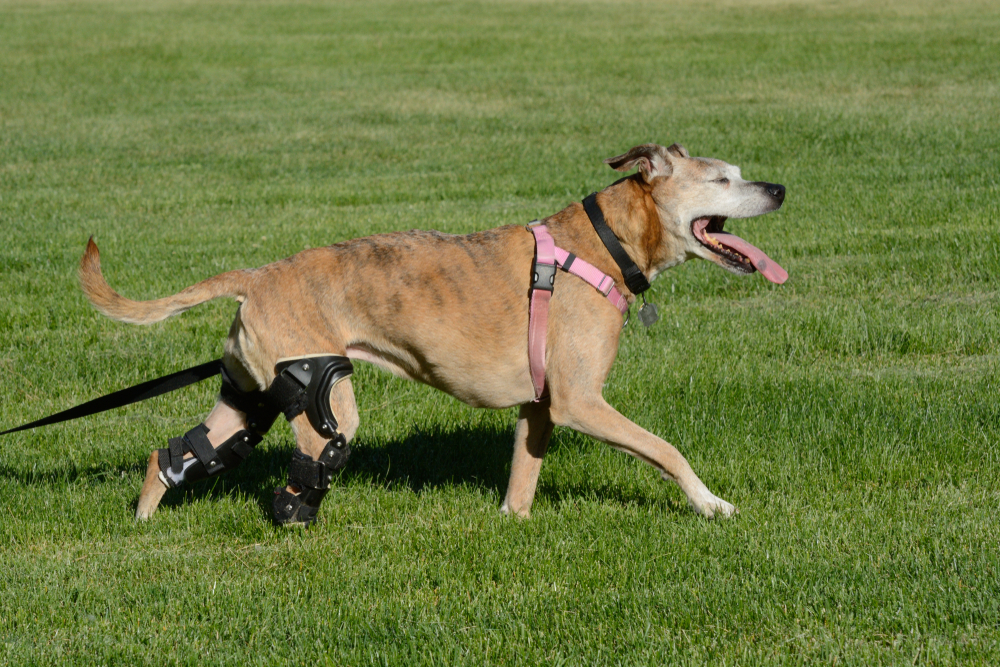
Frequently Asked Questions About CCL Surgery in Dogs
How long does CCL surgery recovery take?
Full recovery typically takes four to six months, though most dogs are comfortable and moving well within eight to twelve weeks. Return to full unrestricted activity is usually cleared after recheck radiographs confirm adequate bone healing.
Will my dog definitely need surgery?
For most medium and large dogs, yes. Surgery consistently outperforms conservative management for dogs over 15 kg. For very small dogs, conservative treatment with strict rest may be successful, but surgery still offers the best long-term joint health outcomes.
Will my dog need surgery on the other leg too?
Not necessarily, but the risk is real. Approximately 40 to 60 percent of dogs with one CCL tear will eventually tear the other. Weight management, controlled exercise, and prompt evaluation of any new lameness on the opposite side are the best tools for reducing that risk and catching a second tear early.
Can my dog run and play normally after surgery?
Most dogs return to normal activity, and many return to high-level athletic function after TPLO or TTA. Extracapsular repair also allows a full return to normal life for appropriately selected patients.
What happens if we don’t do surgery?
Without surgical stabilization, the joint continues to be abnormally stressed. Arthritis progresses rapidly, the meniscus is at high risk of tearing secondarily, muscle atrophy makes eventual recovery harder, and the opposite leg carries a disproportionate load throughout. Untreated CCL tears in medium and large dogs rarely hold up over time, and the outcome of delayed surgery is generally not as good as surgery performed promptly.
A Path Forward for Your Dog
A CCL tear is serious, but it is also one of the most treatable orthopedic conditions in veterinary medicine. Early diagnosis, thoughtful surgical planning, a committed recovery process, and attentive long-term joint care give most dogs an excellent quality of life for many years after injury.
Our family-style approach means your dog’s care plan is built around their individual situation, not a generic protocol. From the first limping appointment through coordinating the right surgical referral and supporting every stage of recovery, we stay involved throughout.
Contact us to schedule an assessment, or visit our after-hours emergencies page if your dog’s lameness is sudden and severe. We’re dedicated to helping your dog get back to having adventures and long walks with their families.

Leave A Comment