

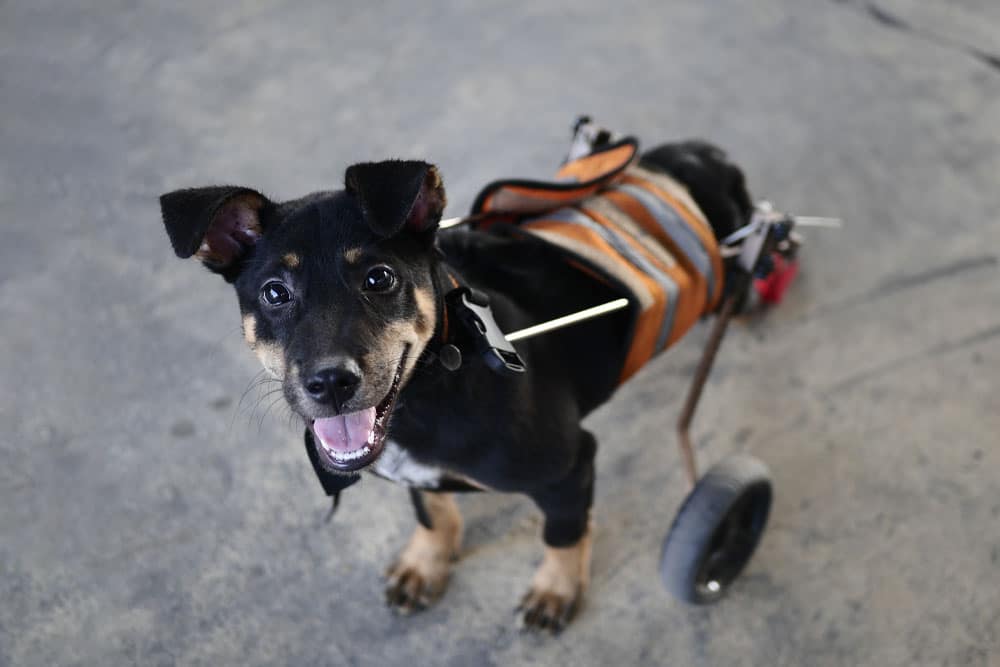
The right time to reach for a harness or cart is earlier than most owners expect: the moment a dog’s movement starts limiting their quality of life, not the moment they can barely walk. Dogs do best when support begins while strength is still there to protect, because strength that is maintained is far easier to work with than strength that has already wasted away. A harness suits a dog who still has functional legs but needs help with balance and transitions, a cart takes over when hind-limb weakness is more significant, and traction aids handle the very first stage, the dog who slides on hardwood and starts hesitating to move. The other half of the timing question is the cause, since arthritis, spinal disease, and nerve conditions each progress on their own schedule.
At North Waterloo Veterinary Hospital in Elmira, we can give you a clear picture of what is happening before you invest in any device. Our diagnostic services include digital radiography read by a board-certified radiologist, in-house and specialized ultrasound, and full bloodwork that can flag systemic conditions affecting comfort and movement. If your pet is moving differently and you are unsure what it means, give us a call and we will help you decide what comes next.
Getting the Timing Right
- Start before the crisis: support works best while strength is still there to keep.
- The window shifts with the condition: the right aid today may not be the right aid next year.
- Match the tool to the moment: traction early, a harness mid-way, a cart when the legs give out.
- Name the cause: how fast things change depends on what is behind the decline.
Is It Just Age, or Is Something Treatable Going On?
Most owners chalk up a stiff, slower senior pet to age alone, and that is almost always a partial explanation. The usual culprit underneath is osteoarthritis, which is manageable rather than inevitable, and there is plenty that can be done about it once it is named. The instinct to wait and see is understandable, but the first move with a slowing senior pet is rarely a product. It is an honest assessment of what changed and why, since support started early, while a pet still has muscle and confidence, prevents the falls and compensatory patterns that speed decline.
When Is the Right Time to Start?
The right time is when small changes first appear, not when they become severe. Early signs are easy to wave off: an occasional stumble, a shuffle before rising, a hesitation at the stairs. Acting at that point, rather than waiting, is what keeps a dog stronger for longer.
The instinct to wait and see is understandable, but it usually costs more than it saves. Once a dog starts avoiding movement because it feels uncertain, muscle fades, joints stiffen, and confidence drops, and each of those makes the next month harder. Stepping in early with a traction aid or a harness keeps a dog moving through the stage when movement still maintains itself, which is exactly when intervention does the most good.
What Window Is Your Dog In?
Mobility loss tends to move through windows, and the right move depends on which one your dog is in right now.
| If your dog… | The window you are in | The move to make now |
| Stumbles occasionally or slips on floors | Early, strength still intact | Start traction and home changes |
| Needs help up or tires on familiar walks | Mid, strength slipping | Add a support harness, book a workup |
| Cannot rise or step behind on their own | Advanced, function largely lost | Fit a mobility cart, plan ongoing care |
Dogs do not always move through these windows at the same pace, and the table is a guide rather than a schedule, but it helps you see what this stage calls for and what to prepare for next.
Why Does Starting Early Matter So Much?
The case for acting early comes down to muscle. Once a dog stops using a weak limb, the muscle around it wastes quickly, and lost muscle is the single hardest thing to rebuild. A harness that keeps a dog walking through the early and middle windows preserves that strength, while waiting until a dog can barely stand means starting recovery from a much weaker baseline. Early support also heads off the secondary problems, the falls, strains, and compensations from limping, that often do as much damage as the original condition. In other words, the timing of the first device shapes how the whole road goes.
What Support For Dogs Fits the Early Window?
In the earliest window the legs still work, and the problems are grip and confidence. Simple tools and a few home changes are usually enough to keep a dog moving safely.
- Rubber toe grips: add traction on hardwood and tile.
- Traction booties: grip and protection on rough ground outdoors.
- An easier home: the changes in an arthritis-friendly home for dogs, and for cats these home modifications for cats, reduce the daily obstacles. Ramps, rugs on hard floors, and raised food and water bowls all earn their place.
Bringing in these changes gradually, before a dog is in real trouble, is the whole point of acting early, since a senior pet often resists even helpful changes when they arrive all at once.
How Do Senior Cats Show Mobility Trouble Differently?
Cats hide pain far better than dogs, so their mobility decline tends to appear as changes in habit rather than an obvious limp. The quiet signs are worth knowing:
- Stopping jumping to favorite perches
- Taking stairs one at a time
- Hesitating at the edge of the litter box
- Sleeping in new ground-level spots
- A dull or matted coat over the back and hips, a classic sign that turning and reaching to groom those areas has become painful
These quiet behavioral shifts deserve the same veterinary workup a limping dog would receive. The home changes that help senior cats most include low-entry litter boxes, a step or ramp to a favored windowsill, and soft easy-to-reach resting spots, all of which are often effective well before any device is needed.
What Support Fits the Middle Window?
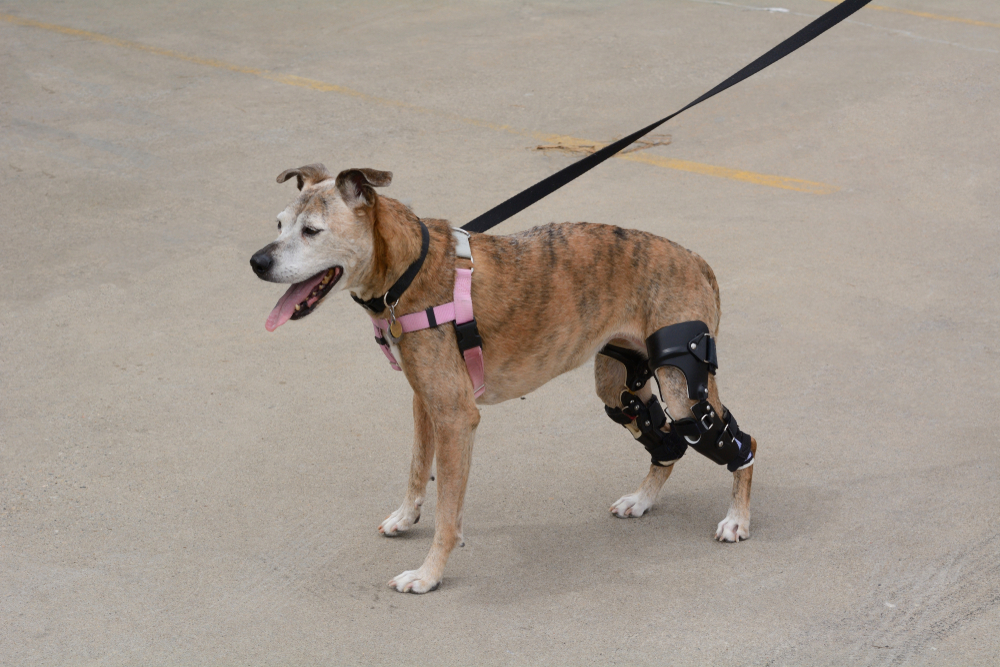
When a dog still walks but needs a hand to rise, manage stairs, or steady the back end, a harness is the right tool, and the style follows the weakness.
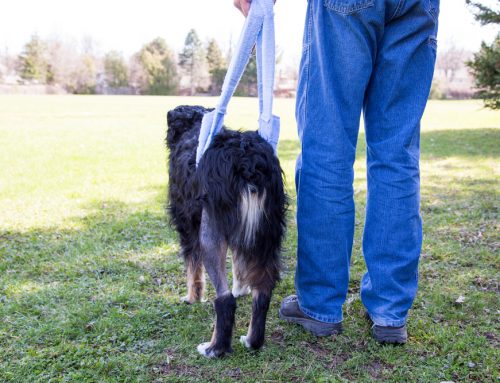
- Rear-support styles: a rear-end harness cradles the hips with a lift handle for transitions.
- Full-body styles: support harnesses and full-body lift harnesses lift front and rear together for a dog weak in more than one limb.
- Knuckling support: knuckling socks help prevent toe scuffing and improve rear-end foot placement in dogs whose back paws are starting to drag.
- Support bands: progressive resistance bands build strength and improve foot placement.
Fit matters more than brand, since a harness that rubs or sits wrong only adds problems. Most dogs settle into one within a week of patient, upbeat introduction.
When Is It Time for a Cart?
The cart window opens when the rear legs can no longer reliably hold weight or take a step. At that point a mobility cart restores genuine independence, letting a dog move, sniff, and stay part of the family’s day. A cart is for active outings rather than all-day use, and fitting matters: most sizing guides work in centimeters and kilograms, but having us confirm the fit avoids the pressure sores and odd compensations a wrong size causes. Most dogs adapt over a week or two of short sessions, and many senior dogs continue active lives once the cart is dialed in.
How Does the Timeline Differ by Condition?
How quickly the windows pass depends entirely on the diagnosis, which is why naming it matters for timing.
- Arthritis: the most common driver, usually gradual, where a harness softens transitions while pain control and weight management work on the joint itself.
- Intervertebral disc disease and fibrocartilaginous embolism: these arrive suddenly rather than gradually, so support may be needed overnight or post-surgically; recovery often runs through a rear harness, and the non-progressive FCE frequently improves, though some pets use a cart long-term.
- Degenerative myelopathy: slow and progressive over months to years, so the windows are long and support climbs steadily from traction to harness to cart.
- Amputation: after osteosarcoma or injury; some pets need temporary help with a harness or traction, while others need long-term help, and the Tripawds community helps families through it.
What Else Belongs in the Plan Over Time?
Because needs shift, a device belongs inside an evolving plan of comprehensive mobility management. The full plan usually layers a few pieces:
- Pain control: anti-inflammatories, monoclonal antibody injections such as Librela for dogs and Solensia for cats, and other medications matched to the cause.
- Weight control: eases every joint. For a 25 kg Labrador, even a 2.5 kg loss is a meaningful change, often doing more than any single product. Our nutrition consultations can help you find the right diet for weight loss and joint health.
- Joint supplements and omega fatty acids: where appropriate to the individual pet to reduce inflammation and improve cartilage health.
- Veterinary physical rehabilitation: targeted exercises hold onto strength and improve balance.
For older dogs and cats, our senior canine and feline wellness program keeps the plan adjusting as the windows change, with regular rechecks built in so the next stage is anticipated rather than reacted to.
Frequently Asked Questions About Timing
Is It Too Early to Start if My Dog Only Slips Sometimes?
Rarely too early. Occasional slipping is exactly the window where traction and small home changes do the most good, heading off the falls and muscle loss that come later. Starting at this stage tends to keep a dog stronger and delay the need for bigger devices.
How Do I Know When the Cart Window Has Arrived?
The signal is whether the rear legs can still hold and move your dog. Walking but tiring or needing a lift means a harness still fits; an inability to support weight or take a step behind means it is cart time. An exam confirms it, especially as a condition keeps changing.
What If I Am Not Sure My Dog Is Ready Yet?
When you are on the fence, an exam is the low-cost way to settle it, and erring toward starting sooner rarely backfires. A traction aid or a part-time harness introduced a little early does no harm, while waiting too long can let strength slip away. If your dog is borderline, we will set a recheck schedule so changes get caught as they happen rather than months later, and we will adjust the plan to match the window your dog is actually in.
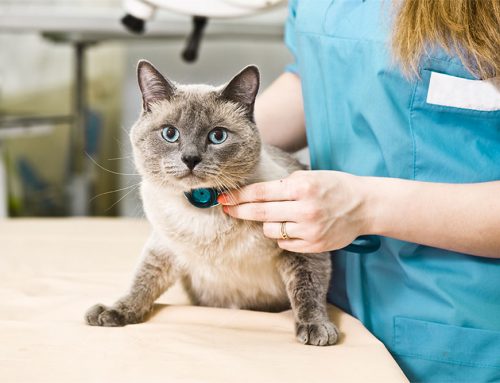
What If My Senior Cat Is Slowing Down But Not Limping?
Cats almost never limp the way dogs do, so quiet changes are the signal: stopping jumping to perches, hesitating at the litter box, sleeping in new low spots, or a matted coat over the back and hips. Any of these warrants an exam, since the underlying issue is usually treatable and home changes can keep them comfortable long before any device is needed.
Are Mobility Devices Covered by Pet Insurance?
Coverage depends on the policy and whether the underlying condition is covered. Many plans reimburse veterinary-prescribed equipment documented as medically necessary, so check your specific plan before buying.
Help To Keep Your Dog Moving Long-Term
Knowing when to act is most of the battle with mobility loss. Step in while strength is still there, match the tool to the window your dog is in, and adjust as the condition moves, and most dogs stay comfortable and active far longer than expected.
If your dog or cat’s gait has changed or you are noticing the early signs of mobility loss, request an appointment or contact us and we will work through it together.

Leave A Comment