

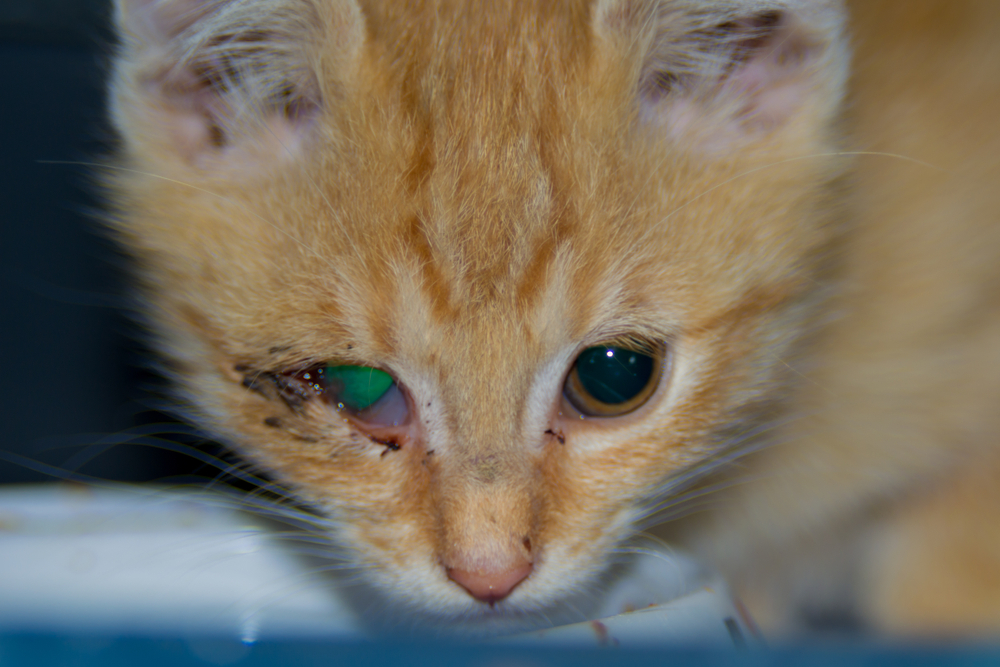
If your dog or cat has entropion (an eyelid that rolls inward) or ectropion (a lid that sags outward), surgical correction is matched to the specific shape of the lid and provides permanent relief for most pets. An inward-rolling lid drags hair across the cornea and causes ulcers, while a drooping lid exposes the eye and invites chronic infection. The procedure removes a precisely measured piece of skin or tightens the lid margin so it sits correctly against the eye. Recurrence is uncommon once the lid anatomy is properly reshaped and the eye has fully healed.
At North Waterloo Veterinary Hospital in Elmira, we offer surgical care for dogs and cats with careful anesthetic monitoring and pain control built into every eyelid procedure. Each correction is planned around your pet’s breed, age, and the millimeters of lid actually involved, because the approach for a Shar-Pei puppy is not the same as the one for a Saint Bernard or a Persian cat. If your pet’s eye has been weeping, squinting, or looking off for more than a few days, come see us for a proper exam.
The Short Version
- Entropion rolls the eyelid inward so hair rubs the eye, while ectropion droops the lid outward and leaves it exposed, and both are corrected with surgery tailored to your pet’s lid shape.
- These are painful conditions, not cosmetic quirks, so squinting, tearing, and pawing at the face all deserve a prompt exam rather than a wait-and-see approach.
- Most pets get lasting relief once the lid is reshaped, and recurrence is uncommon when the anatomy is corrected precisely and the eye heals fully.
- We correct conservatively on purpose, removing just enough tissue to reset the lid without overcorrecting it into the opposite problem.
Inward Versus Outward: What Is Each Condition Doing to the Eye?
Both are eyelid malpositions, but they cause opposite problems. With entropion, the lid margin curls inward, so every blink drags hair across the eye, triggering irritation and, over time, corneal damage. Ectropion is the reverse: the lower lid droops outward, exposing the pink inner tissue and part of the eye surface to dust, wind, and bacteria, so the eye dries out and collects debris in the sagging pocket the lid creates.
Getting the diagnosis right matters more than it might seem, because several eye problems look alike from the outside. A red, weepy eye could be entropion, ectropion, a scratched cornea, a blocked tear duct, or a mix of these at once. Our on-site eye examinations look at lid position, tear production, and corneal health together to sort out what is actually driving the discomfort before we recommend anything. If your pet’s eye has looked irritated for more than a day or two, you can book an eye exam and we will take a proper look.
Which Pets Are Built to Develop Eyelid Problems?
Most eyelid disorders trace back to the shape of the face, so build predicts risk better than almost anything else. Loose skin, deep-set eyes, and heavy folds raise the odds sharply. Entropion favors breeds with extra facial skin or a flatter face, while ectropion favors breeds with a naturally loose, droopy lower lid.
| Condition | Typical build | Breed examples |
| Entropion | Loose facial skin, deep-set eyes, flat faces | Shar-Pei, Chow Chow, Bulldog, Rottweiler, Persian and other flat-faced cats |
| Ectropion | Naturally loose, droopy lower lids | Saint Bernard, Bloodhound, Basset Hound, Cocker Spaniel |
| Both at once | Heavy brow and jowl skin | Large breeds with pronounced facial folds |
Breed is not the whole story. Age-related changes, chronic inflammation, and old scarring can all pull a lid out of position over time. Some pets develop a temporary, pain-driven version, where an eye hurts so much that the pet squints hard enough to roll the lid inward, which then makes it hurt more. Risks like these are worth raising at routine wellness visits, especially for a puppy or kitten from a predisposed breed.
Spotting Trouble Early: When Does an Irritated Eye Become Urgent?
An irritated eye becomes urgent when it changes quickly. An eye held tightly shut, suddenly cloudy, or clearly more painful than it was yesterday should be seen the same day. Milder squinting or watering that has hung around for more than a day or two still deserves a look, since eyelid problems do not resolve on their own and get harder to treat with time.
Here is what to watch for at home:
- Squinting or a half-closed eye: A reluctance to open the eye, especially in bright light, is one of the clearest signs of eye pain, not a cosmetic quirk to shrug off.
- Discharge or wetness: A steady stream of tears, or thicker yellow-green discharge, often signals ongoing irritation or a brewing infection.
- Redness and swelling: An inflamed, bloodshot eye or a visibly puffy lid means the surface is unhappy.
- Rubbing and pawing: Pets who keep swiping at one eye or grinding their face into the carpet are telling you it hurts.
The complications differ by condition. With entropion, constant friction wears the surface into corneal ulcers, which are painful, prone to infection, and capable of scarring vision permanently. With ectropion, the exposed eye dries out, collects grit and bacteria, and develops recurring conjunctivitis that flares again and again.
A rapidly worsening eye is one of the situations where a same-day look can genuinely save vision, so call us during our open hours and we will work your pet in. If the eye takes a turn overnight or on a weekend, do not wait until morning: head to an after-hours veterinary emergency hospital and we will pick the care up from there.
Pinning Down the Problem: How Is an Eyelid Abnormality Diagnosed?
Diagnosis starts with a careful, hands-on eye exam. The goal is to confirm not just that a lid is out of place, but why, and to catch any damage the malposition has already caused. A typical workup looks like this:
- A close look at lid position: We assess how the lid sits against the eye, relaxed and during a blink, to see whether it is rolling in or drooping out.
- Corneal and tear-film testing: A handful of quick ocular tests measures tear production and stains the cornea to reveal scratches.
- A check for misplaced lashes: The exam rules out eyelash problems, since misdirected or extra lashes can imitate a rolled lid or worsen the irritation.
- A pain test with topical anesthetic: A drop of numbing solution tells us whether a lid is structurally rolled or only rolling in because the eye hurts. If it relaxes into a normal position once the pain is gone, the underlying issue may be treatable without major surgery.
That last step matters, because treating a pain-driven entropion as if it were permanent would mean operating on a lid that never needed reshaping.
From Temporary Tacking to Permanent Repair: Which Fix Fits Your Pet?
Treatment ranges from temporary measures that buy time to permanent correction that fixes the lid for good. The right choice depends on your pet’s age, whether the lid problem is structural or pain-driven, and how much of the eye is affected.
When Is a Temporary Fix the Right Move?
Temporary correction fits when a pet is still growing, or when squinting is driven by pain rather than by the true shape of the lid. Temporary eyelid tacking uses a few small sutures to hold the lid in a better position, protecting the cornea now while giving the face time to mature or the pain time to settle. Because it is reversible and repeatable, tacking keeps the eye comfortable until the anatomy stabilizes, at which point we can decide whether a lasting correction is even needed. We’ll keep a close watch on how your puppy or kitten’s facial anatomy is changing during their first wellness visits.
How Does Permanent Surgical Repair Work?
Definitive eyelid surgery is the lasting fix once a pet has finished growing and the lid problem is clearly structural. It resets the lid by removing a carefully measured amount of tissue, and conservative measurement matters here because taking too much simply trades one problem for the opposite one: shave off too much skin during an entropion repair, and you can pull the lid into an ectropion. The exact technique depends on the species, the lid involved, and how much correction the anatomy needs, so no two procedures are identical.
Most corrections are day procedures. We confirm the exact millimeters at a pre-op check, build the anesthetic protocol around your pet’s age, weight, breed, and health, and start pain relief before the first incision. A team member monitors heart rate, breathing, oxygen, and temperature throughout, and your pet goes home the same day with written instructions.
Is Entropion Different in Cats?
Cats often present differently than dogs. Entropion in cats tends to show up later in life and frequently follows chronic eye-surface inflammation rather than arriving as a young, breed-linked problem, so we often treat the underlying irritation and the lid position together. Flat-faced cats are the exception, since their facial structure sets up a more dog-like, conformational entropion. If your cat has been squinting or holding an eye partly closed, come see us so we can evaluate the whole eye, not just the lid.
After the Procedure: What Does Healing and Home Care Involve?
Recovery from eyelid work is usually straightforward, running from a slightly swollen, sleepy first few days through complete healing over a few weeks. Your job at home is mostly protection and patience: keep the eye safe from rubbing, give medications on schedule, and watch for the handful of signs that mean you should call us.
What Should I Expect in the First Few Days?
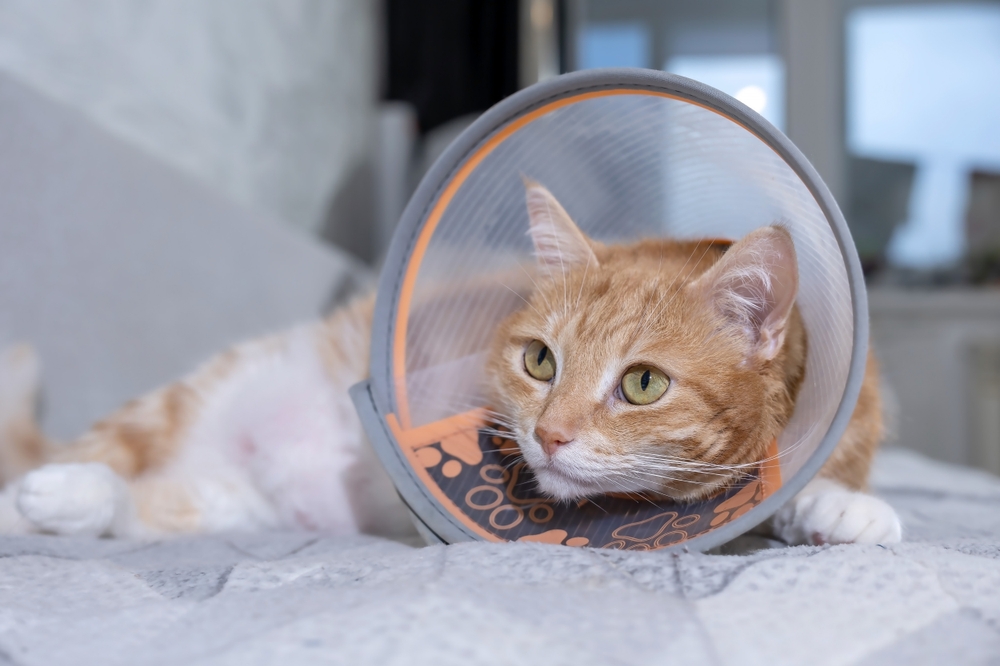
The first days bring some swelling, mild bruising, and a bit of squinting, all of which are normal. The most important task is keeping your pet from rubbing or scratching the site, which is exactly what the Elizabethan collar is for. It stays on around the clock until we say otherwise, because one good rub can undo the repair in seconds.
| Normal and expected | Call us about |
| Mild swelling or bruising of the lid | Increasing redness, swelling, or heat after day two or three |
| A little squinting or blinking | Discharge that turns thick, yellow, or green |
| Slight clear tearing | Sutures that come loose or a wound that opens |
| Sleepiness the first day | An eye held tightly shut, or obvious worsening pain |
A few practical habits help with medications. Administering eye medications goes more smoothly when you come from the side rather than straight at the face, steady the head, and space different drops a few minutes apart. Give oral pain medication with food and on the schedule we set, and never add a human eye product without checking first. If anything looks off, call us with any post-operative concern and we will talk it through.
How Long Does Full Healing Take?
The full healing timeline runs a few weeks:
- Suture removal: Skin sutures typically come out about two weeks after surgery, once the incision has knit together.
- Swelling resolution: Most of the puffiness fades within the first two weeks.
- Final lid position: The lid settles into its true position as the last of the swelling disappears.
- Recheck visits: We confirm the cornea is healing and the lid is sitting where it should, and adjust the plan if needed.
Because we correct conservatively, a small revision is occasionally recommended if a lid needs a touch more adjustment once fully healed. That is not a sign anything went wrong: it is far safer to correct a little more later than to overcorrect and create the opposite problem.
Counting on Results: How Reliable Is Eyelid Surgery?
Eyelid surgery has a high success rate in experienced hands, and most pets get lasting relief from a problem that had been bothering them for a long time. Recurrence is uncommon once a mature lid has been properly reshaped. A few factors shape how smooth the outcome is, and most of them are known well before a surgery date is ever set:
- Severity of the malposition: Milder cases are simpler to correct precisely in a single procedure.
- Overall eye health: An eye without prior scarring or infection heals more predictably.
- Facial maturity: Waiting until growth is finished reduces the odds of recurrence.
- Quality of home care: Diligent E-collar use and medications given on schedule protect the repair while it heals.
One honest note on expectations: if a cornea already carries scarring from months of rubbing, that scar may not disappear completely. What surgery reliably delivers is pain relief and protection from further damage, which is the goal that matters most for your pet’s comfort and long-term vision.
Outcomes like these come down to careful planning and follow-through, which is where an experienced surgeon makes the difference.
Your Questions About Eyelid Surgery, Answered
Will my pet’s eyelid problem come back after surgery?
For most pets, recurrence is unlikely once the repair has settled. As soon as the lid anatomy is properly reshaped and the eye has healed, the problem rarely returns. The main exception is operating too early, before a puppy has finished growing, since a young face can keep changing shape and pull the lid back out of position. That is exactly why we often use temporary tacking in growing pets and save the permanent repair for a mature face.
Is entropion or ectropion surgery painful for my pet?
We manage pain aggressively so your pet stays comfortable. Pain relief goes in before the procedure begins and continues afterward, and most pets are back to normal spirits within a day or two. Some post-operative squinting and swelling are normal and mild. The bigger discomfort is usually the condition itself, the daily friction or exposure that surgery is meant to stop.
Will my pet’s vision be affected?
That depends mostly on how long the lid has been rubbing or exposing the eye. Most pets keep their vision entirely, because surgery stops the damage before it reaches the deeper layers of the cornea. Pets who have gone a long time with an untreated ulcer can be left with a scar that dims vision in that spot, which is the strongest argument for having a squinting eye checked sooner rather than later.
Let’s Get That Eye Feeling Right Again
Entropion and ectropion can look worrying, but they are among the more manageable eye problems we treat. Precise, well-timed surgery restores comfort, protects the cornea, and gives most dogs and cats lasting relief from a lid that had been rubbing or exposing the eye for far too long. The key is not waiting until a fixable irritation has turned into a scarred cornea.
If your pet has been squinting, tearing, or holding an eye partly shut, schedule a consultation so we can take a proper look. Our team provides eyelid surgery for dogs and cats in Elmira with the careful planning and pain management that eyelid work deserves, and we will walk you through exactly what your pet needs before anything is scheduled.

Leave A Comment