


Worms in a new puppy or kitten are so common that veterinarians essentially expect them, so a positive test says nothing about how well you are caring for your pet. Most puppies are infected by their mother before they are even born, and both species can swallow parasite eggs while nursing or exploring the world in their first weeks. An infected youngster often looks completely fine while the worms quietly take nutrients meant for growth, which is why treatment begins early rather than after symptoms appear. With routine deworming and stool checks to confirm the parasites are gone, this is one of the most fixable problems in veterinary medicine.
Hearing the word “worms” at a first appointment lands hard, and walking families calmly past that moment is something we do often at North Waterloo Veterinary Hospital. Our puppy and kitten wellness programs in Elmira build fecal screening and deworming into each early visit, so parasites are caught and cleared before they interfere with growth. We will also cover the simple hygiene habits that protect the people in your home, since a few of these parasites can spread to humans. Worried about your new puppy or kitten? Reach out and we will talk through the plan together.
The Short Course on Puppy and Kitten Worms
- Nearly every puppy and many kittens arrive already carrying intestinal parasites, so early deworming is planned care, not a reaction to a problem.
- A single dose clears the adult worms present that day but misses the larvae still developing in tissue, which is why puppies and kittens are dewormed every two weeks rather than once.
- Fecal testing names the parasite we’re treating, since no one dewormer covers everything and protozoa like coccidia and giardia need their own medications.
- Year-round monthly prevention picks up where the puppy or kitten schedule ends, closing the gaps that reinfection and heartworm slip through.
Why Does My Kitten Look Perfectly Healthy If They Have Worms?
A puppy or kitten can carry a heavy load of intestinal parasites before showing a single outward sign, which is exactly why we test and treat proactively instead of waiting for something to look wrong. By the time signs appear, the worms have often been at work for a while.
When signs do surface, they’re easy to pin on something else, since loose stool in a young pet gets chalked up to a diet change or stress far more often than a parasite. The tell-tale clues are quiet: a round, bloated belly on an otherwise thin body, a dull coat, slower weight gain than a littermate, the occasional bout of soft stool. None of them screams “worms,” and that’s the trap.
Which Worms and Parasites Are We Actually Looking For?
The common culprits fall into a few groups, and they behave differently enough that knowing them helps the whole plan make sense.
| Parasite | How it spreads | Why it matters |
| Roundworms | Before birth, through milk, from soil | Most common; steals nutrients from a growing body |
| Hookworms | Through milk, skin, soil | Feeds on blood; can cause dangerous anemia in the very young |
| Whipworms | Eggs in soil, outdoor exposure | Easily missed on a single fecal test |
| Tapeworms | Swallowing an infected flea | Requires treating fleas at the same time |
| Coccidia | Contaminated environment | A protozoan, not a worm; standard dewormers miss it |
| Giardia | Contaminated water, self-reinfection | Needs its own test and medication |
A few details behind the table change how we treat:
- Roundworms and hookworms are usually present from birth. Both roundworms and hookworms pass from mother to litter before birth and through nursing, and roundworm eggs shed into soil stay infectious for years, so a yard or park is an easy place to pick them up again.
- Whipworms and tapeworms are the outdoor and flea connections. Whipworms are mainly a canine problem that climbs with outdoor exposure, and they’re notorious for slipping past a single fecal test because they shed eggs only intermittently. Tapeworms arrive when a pet swallows an infected flea during grooming and show up as rice-like segments near the tail. Because tapeworms depend on the flea life cycle to keep spreading, clearing them for good means treating the fleas at the same time.
- Coccidia and giardia aren’t worms at all. Coccidia in puppies and kittens is a single-celled protozoan that routine roundworm dewormers do nothing against. Giardia works the same way and needs its own test and medication, and because a pet can reinfect themselves from spores clinging to their coat, treatment only holds when it’s paired with a decontamination routine.
Breaking that reinfection cycle during and after treatment comes down to three habits:
- Bathe partway through the medication course, which rinses spores off the coat so your pet stops swallowing them while grooming.
- Pick up stool promptly from the yard and litter box, since fresh contamination is where reinfection starts.
- Clean and disinfect surfaces, washing bedding in hot water and disinfecting food and water bowls, crates, and the hard floors your pet uses.
Why Is a Stool Test Its Own Separate Step?
Treatment without testing is guesswork. Because no dewormer covers every parasite and no single method detects every egg, fecal testing tells us which parasite we’re treating, so we reach for the right medication the first time.
A fecal flotation spins the sample so parasite eggs rise to the top where we can identify them, and it’s the workhorse for roundworms, hookworms, and whipworms. Antigen tests do something different, looking for proteins from parasites like giardia that a flotation can miss. When a first sample comes back clean but the signs still point to a parasite, a repeat test a couple of weeks later often finds what an intermittent shedder was hiding.
Testing has a second job at the other end of treatment. A recheck fecal two to four weeks after the course finishes is what confirms the parasites are actually gone rather than assumed gone, and it catches reinfection early if the environment is still contaminated. Having an on-site laboratory means we can run these checks without a long wait and match the plan to the answer the same day.
How Often Should a Puppy or Kitten Be Dewormed?
The standard deworming schedule runs every two weeks from about two weeks of age through roughly 16 weeks. That spacing is deliberate: it catches each new wave of larvae right as it matures into egg-laying adults.
After that early series, prevention shifts gears. Monthly parasite prevention can begin as early as eight weeks and continues year-round, so the protection built over those first weeks doesn’t lapse the moment the two-week schedule ends. It dovetails neatly with the early-life wellness visits already on the calendar for vaccines and growth checks, so deworming rarely means an extra trip.
What Actually Happens When We Deworm Your Puppy or Kitten?
A deworming visit starts with a nose-to-tail exam and an accurate weight, because parasite medication is dosed by body weight and a growing youngster changes fast. That’s one reason the early visits cluster so tightly: each one recalibrates the dose to the animal in front of us. Our team checks a stool sample when it’s indicated, gives the appropriate dewormer, and confirms your pet is comfortable before you head home.
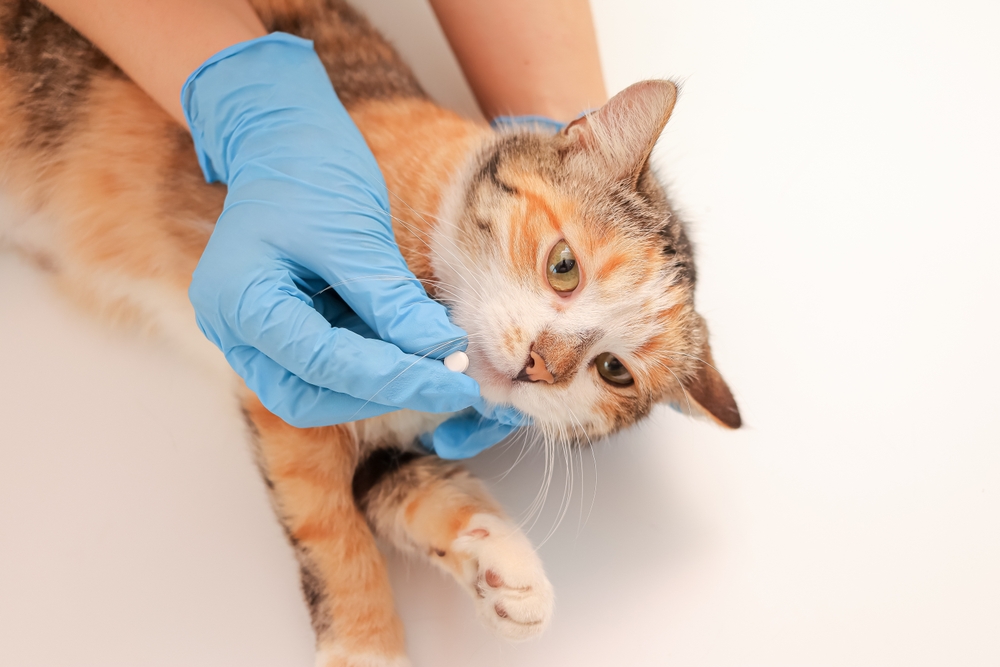
Medications come in several forms. Most are given by mouth as a flavored tablet, a paste, or a liquid, and many puppies take a chewable like a treat. Kittens who object to a pill often do better with a small amount of liquid or a topical product that covers certain parasites through the skin. As a Cat Friendly Certified practice, we would rather adjust the format than wrestle a kitten, and we pick whichever option gets the full dose in with the least stress.
Side effects are usually mild and short-lived: a soft stool for a day, a quieter appetite that evening, or visible worms in the stool as the parasites clear. Call us if you notice repeated vomiting, ongoing diarrhea, or lethargy that lingers past a day. If that happens outside our hours, after-hours emergency care is the right next step.
Do I Really Need Parasite Prevention in the Winter?
Year-round parasite prevention is the accepted standard because parasites don’t keep a tidy seasonal calendar. The old seasonal approach leaves gaps during months that feel like the off-season but are still active enough for parasites to take hold, and in a Waterloo Region winter, a January thaw or an indoor pest is all it takes.
- Fleas carrying tapeworms and mosquitoes carrying heartworm love to move indoors for the winter
- Parasite eggs can be found in houseplant soil or survive in your backyard even through a freeze
- Contact with other pets like in daycare, boarding, and grooming facilities increases exposure
Heartworm is the reason to be especially careful about gaps. Spread by mosquitoes and far more serious than an intestinal worm, it settles in the heart and lungs where damage builds quietly. A monthly dose costs little, while treating an established infection is expensive, hard on the dog, and entirely avoidable. Cats don’t even have a treatment. A monthly combination product handles heartworm alongside common intestinal parasites in one dose, so there’s only one date to remember.
Does My Indoor Cat Really Need the Same Plan as a Farm Dog?
Prevention and testing frequency should be tuned to how your pet lives, so the plan for a strictly indoor kitten looks different from the one for a dog who roams a rural property. Sorting out where your pet lands is exactly what an individualized wellness program is for.
A few factors move the needle most:
- Outdoor access and hunting. A cat who catches mice or a dog who explores fields meets far more parasites than one who stays in.
- Contact with other animals. Daycare, boarding, dog parks, multi-pet homes, and time around livestock all raise the odds of picking something up.
- Environment and habits. Access to standing water, wildlife, or farm animals increases exposure; a clean, contained routine lowers it.
None of this changes the early deworming series, which every puppy and kitten needs. It shapes what comes after: how aggressively we test and which prevention makes sense for the life your pet leads.
Can My Family Catch Worms From Our New Pet?
Several of the parasites in a young pet are zoonotic parasites, meaning they can pass from animal to person, so the hygiene habits below protect your household as much as they protect your pet. Children and anyone with a weakened immune system face the greatest risk, mainly from roundworms, hookworms, and giardia.
Kids are more exposed simply because they play on the floor and aren’t always careful about washing up. Larvae in contaminated soil and giardia on contaminated surfaces are the usual routes. A few household habits keep the risk low:
- Wash hands after pet contact. Scrub after handling your pet, cleaning the litter box, or gardening, and help young children do the same.
- Cover sandboxes. A cover keeps neighborhood animals from using the sand as a litter box.
- Keep prevention current. Staying on the deworming and monthly prevention plan is the single best way to lower what your pet can pass along.
Your Puppy and Kitten Deworming Questions, Answered
Can I use an over-the-counter dewormer instead of coming in?
Pet-store dewormers usually target only one or two parasites, most often roundworms, and do nothing for hookworms, whipworms, tapeworms, coccidia, or giardia. Without a stool test you can’t know which parasite you’re dealing with, so the real problem may go untreated while you assume it’s handled. Dosing is also weight-specific, and a wrong dose either undertreats or risks making your pet unwell. A quick visit gets you the right medication for the right parasite at the right dose.
My puppy passed a worm after treatment. Did the medication fail?
Seeing worms in the stool after a dose is normal and usually means the medication is doing exactly what it should, clearing the parasites out of the intestines. Not seeing them doesn’t mean it didn’t work; many are too small to see. What matters is finishing the full deworming series, because that first dose only cleared the adults present that day while more larvae are still maturing. If you see ongoing diarrhea, vomiting, or a pet who seems unwell, give us a call so we can check.
My kitten is strictly indoors. Do they still need deworming?
Indoor kittens still need the early deworming series, because most are infected by their mother before they ever set a paw outside. Roundworms and hookworms pass through the placenta and milk, so an indoor life doesn’t prevent that first exposure. What indoor living does change is the plan afterward: with less ongoing exposure, we tailor the long-term prevention and testing schedule to a lower-risk lifestyle.
Setting Up Your Elmira Puppy or Kitten for a Parasite-Free Start
A strong parasite plan rests on three pieces that lean on each other: the early series of deworming every two weeks, a monthly parasite prevention plan once that series wraps, and regular fecal testing to confirm the whole thing is working. Skip any one of them and you leave a gap the next generation of parasites is happy to fill.
Bringing home a new puppy or kitten in Elmira should feel like joy, not worry, and getting the parasite plan sorted early is one of the simplest ways to protect both your pet and your family. Request an appointment with North Waterloo Veterinary Hospital and we’ll build a schedule that fits your pet’s age, lifestyle, and your household, then walk it with you from the first visit on.



Leave A Comment